
Strokecremains one of Australia’s leading causes of disability, making stroke awareness an important topic for healthcare practitioners. Whether you provide neurological care, rehabilitation, general practice or integrative healthcare, patients increasingly turn to online resources when searching for appropriate support.
With this in mind, this guide explores key aspects of stroke awareness, prevention and recovery. It also highlights how maintaining a professional online presence can help practitioners become more visible to patients seeking appropriate healthcare services.
Stroke affects thousands of Australians each year, and early recognition plays an important role in timely medical assessment. As healthcare professionals, practitioners can support patients by providing education, encouraging appropriate referrals and coordinating care across multidisciplinary teams.
Common stroke awareness discussions include:
In addition, patients increasingly research these topics online before deciding which healthcare professional to contact. Therefore, maintaining a complete digital profile can help ensure patients find your services when they search for appropriate care.
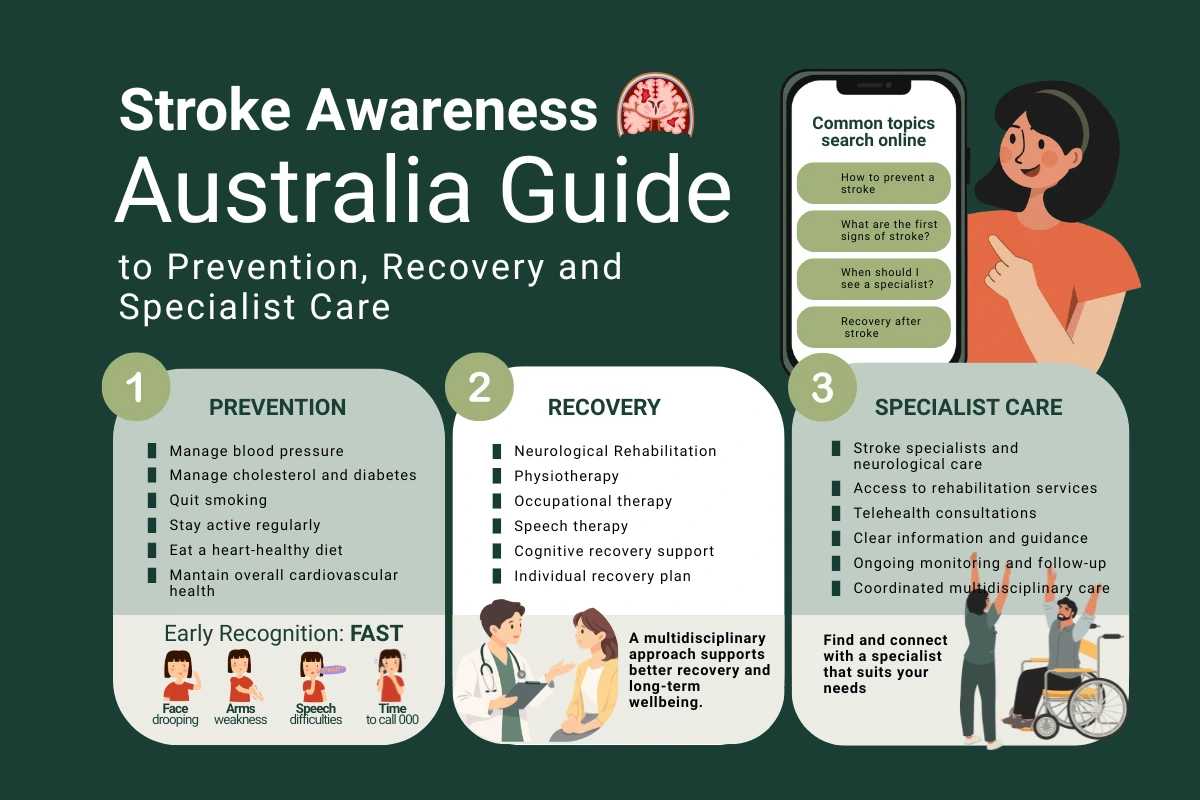
Although no single strategy can eliminate stroke risk, encouraging healthy lifestyle choices supports broader public health goals.
Common topics discussed with patients include:
Healthcare practitioners also educate patients about recognising the FAST stroke test, which focuses on:
Patients may also ask about transient ischaemic attack (TIA), sometimes called a mini stroke, and whether early signs require urgent assessment. Encouraging prompt medical attention remains consistent with national stroke awareness messaging.
Stroke recovery varies for every individual. As a result, patients often search online for information about stroke recovery, rehabilitation services and ongoing support after leaving hospital.
Depending on their clinical needs, patients may require:
Patients may also search for terms such as:
For this reason, maintaining an accurate practitioner profile helps patients understand the services you provide. It also allows them to determine whether your practice aligns with their healthcare needs.
Many Australians now begin their healthcare journey online. As a result, searches for stroke specialist Australia, stroke care Australia and booking a stroke specialist in Australia reflect this growing behaviour.
When comparing healthcare providers, patients often consider:
Providing these details in one location can support informed decision-making while strengthening your online visibility.
Ultimately, healthcare practitioners who maintain current online profiles can make it easier for patients to discover their services. This can help patients identify appropriate care pathways based on their individual needs.
Healthcare practitioners invest significant time in developing their clinical expertise. However, maintaining an accessible online presence also plays an important role in today’s digital healthcare environment.
CannaDr provides an online directory where AHPRA-registered authorised prescribers can present key practice information, including:
Rather than relying solely on referrals, practitioners can also strengthen their digital presence through a platform designed to help patients discover healthcare professionals offering alternative healthcare consultations.
Furthermore, a complete profile allows patients to compare practitioners using consistent information. This can help them identify suitable healthcare options before making a booking enquiry.
Patients increasingly expect convenient access to healthcare information before arranging appointments. They often research topics including:
Practitioners who maintain accurate digital profiles help improve access to healthcare information while supporting informed patient choices.
Telehealth availability, transparent consultation details and clear service descriptions also assist patients living in regional and remote communities across Australia.
Stroke awareness remains an important part of Australia’s healthcare landscape. By promoting evidence-based education, recognising stroke symptoms and supporting coordinated care, healthcare practitioners continue contributing to improved patient pathways.
Equally important is ensuring patients can easily find your practice when searching online. Maintaining an up-to-date profile on CannaDr allows practitioners to showcase their services, consultation options and availability in one convenient location.
If you are an AHPRA-registered authorised prescriber, consider reviewing your CannaDr profile to ensure patients can easily discover your practice when looking for appropriate healthcare services.Stroke awareness remains an important part of Australia’s healthcare landscape. By promoting evidence-based education, recognising stroke symptoms and supporting coordinated care, healthcare practitioners help improve patient pathways.
Equally important, patients need to find your practice easily when searching online. Maintaining an up-to-date profile on CannaDr allows practitioners to showcase their services, consultation options and availability in one convenient location.
For this reason, if you are an AHPRA-registered authorised prescriber, review your CannaDr profile regularly. Keeping your profile current can help patients discover your practice when searching for appropriate healthcare services.